
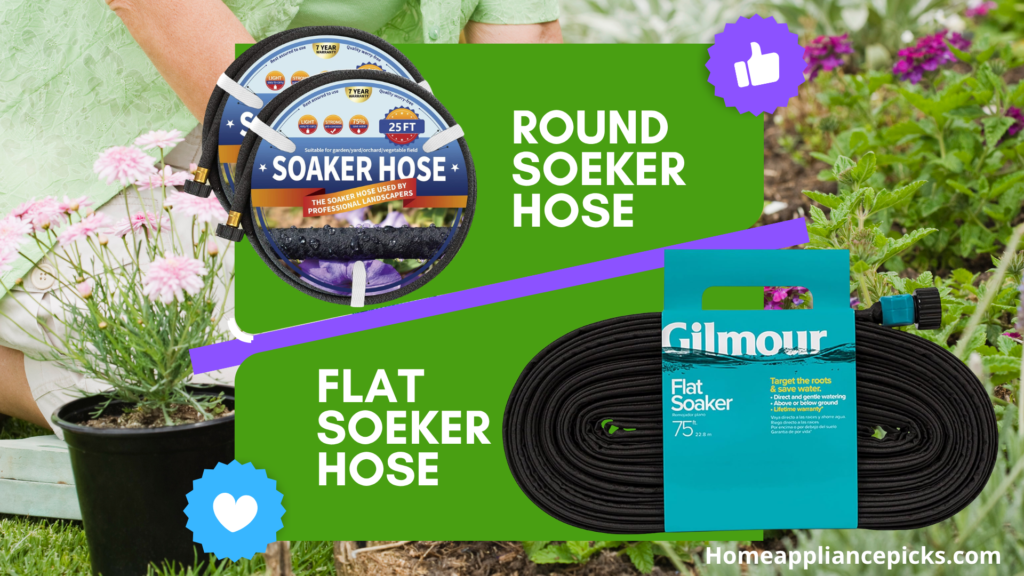
The round vs flat soaker hose question comes down to one thing: how your garden is shaped. A round soaker hose weeps water from every side and snakes around trees, shrubs, and curved beds without kinking. A flat soaker hose weeps from one side, lies neatly along straight rows, and stores compactly like an extension cord.
We tested and compared both types across water distribution, durability, kinking, burying depth, storage, and cost. The short verdict: round wins for curved beds and long-term durability, while flat wins for straight vegetable rows, easy storage, and tight budgets.
Below we break down every difference that matters, then give you two proven picks for each type so you can buy with confidence. Our overall favorite round hose is the Rocky Mountain Goods, and our top flat pick is the Gilmour Flat Soaker Hose.
Round vs Flat Soaker Hose: Side-by-Side Comparison
| Feature | Round Soaker Hose | Flat Soaker Hose |
|---|---|---|
| Water holes | All sides (360°) | One side only |
| Water spread | Even, all-around | Targeted, one direction |
| Best layout | Curves, trees, shrubs | Straight rows, raised beds |
| Kinking | Resists kinks in curves | Kinks if wound tightly |
| Durability | Higher — often lasts longer | Good, but vinyl wears faster |
| Burying | Can bury deeper | Mulch only, not heavy soil |
| Storage | Bulkier to coil | Rolls up compactly |
| Price | Slightly higher upfront | Usually cheaper |
How We Compared Round and Flat Soaker Hoses
We evaluated both hose types using Amazon customer data — star ratings, review volume, and verified purchase feedback — alongside manufacturer specs and real gardener reports after full growing seasons. Our goal was a clear, honest answer to the round vs flat soaker hose debate, not a vague “it depends.”
We focused on the differences that change watering results in a real garden: how evenly water spreads, how the hose handles curves, how long it survives sun and pressure, and how easily it stores. Research into drip irrigation guided our understanding of how each profile delivers moisture to the root zone.
Water Distribution: All-Around vs One-Sided
This is the core difference in the round vs flat soaker hose comparison. A round hose has tiny pores all around its surface, so water weeps in every direction — ideal when you want even moisture circling a tree trunk or wrapping a clustered planting.
A flat hose has holes on one side only. Lay it hole-side down and water goes exactly where you point it, straight into the soil along a row. That precision is great for vegetable rows but useless when the bed curves, because half the hose ends up watering empty ground.
Under pressure, a flat hose actually rounds out and distributes fairly evenly, but the one-sided design still makes it a row specialist. Round is the generalist.
There is a practical consequence here that catches new gardeners off guard. With a flat hose, orientation matters — flip it hole-side up by accident and you spray the leaves instead of soaking the roots, inviting fungal problems like powdery mildew. A round hose removes that worry entirely, because there is no wrong side to lay down.
For densely planted beds where stems and foliage crowd together, the all-around weep of a round hose reaches roots that a one-sided flat hose would miss. For tidy, spaced-out rows, the targeted flat stream wastes less water on bare soil between plants. Both can save up to 70% of the water a sprinkler wastes — the difference is precision versus coverage.
Durability and Material
Round soaker hoses are usually made of rubber or recycled rubber, which handles pressure and sun better and tends to outlive flat vinyl models. Many round hoses last several seasons; the best carry multi-year warranties.
Flat hoses are often vinyl or nylon-coated mesh — lightweight and affordable, but they degrade faster under UV and stiffen in cold. They are perfectly durable for a few seasons of careful use, just not the decade-long fixtures that heavy rubber round hoses can become.
Across the board, brass connectors outlast plastic ones on either type. The fitting is where most hoses fail first, so it is worth checking before you buy.
Climate matters too. In hot, sunny regions, a vinyl flat hose left exposed can crack within a single season, while a recycled-rubber round hose shrugs off UV far better. In cold climates, both stiffen, but rubber tends to bounce back without splitting once it warms. If you leave hoses out year-round rather than storing them, the durability gap between round rubber and flat vinyl widens considerably.
One honest caveat on the round side: avoid the cheapest rough-textured black round hoses. Long-term users report those failing inside a year, which is why warranty length and verified reviews matter more than the round-vs-flat label alone. A quality flat hose beats a bargain-bin round one every time.
Kinking, Snaking, and Storage
Here the two types trade wins. A flat hose rolls up compactly and lies flat without twisting, so it is easier to unroll, position, and store off-season. But wind it too tightly around a curve and it kinks, choking water flow.
A round hose resists kinking through curves and snakes around bushes and trees far more naturally — its whole strength. The trade-off is bulk: it is stiffer to coil and takes more space to store.
If your beds are straight and storage space is tight, flat has the edge. If you are weaving around obstacles, round handles it without a fight.
Setup time differs as well. A flat hose unrolls like a ribbon and lies down fast, so a long straight run takes minutes. A round hose, especially stiff rubber, often needs to be stretched in the sun for an hour first so it relaxes and stops trying to coil back up. Plan for that extra step if you choose round — it is the difference between a hose that holds your curves and one that fights you the whole way.
For winter, flat hoses fold into a small bundle that tucks onto a shelf. Round hoses need a wider loop and more room. Neither should be left to freeze full of water, so drain both before the first hard frost regardless of profile.
Burying Under Mulch or Soil
Both types can sit under 1–2 inches of mulch to cut evaporation and stay in place. The difference shows when you go deeper. A round rubber hose can be buried under more material without the weight pinching off the flow.
A flat hose should stay under light mulch only — heavy soil can press it down enough to restrict water through the thin profile. For a permanent buried line under a perennial bed, round is the safer long-term choice.
Price and Value
Flat soaker hoses usually cost a little less upfront, which makes them the natural starting point for first-time users and budget gardens. Round hoses cost slightly more but often last longer, so the price-per-season can actually come out lower over time.
Neither is expensive. The real value question is fit: a cheap flat hose that kinks around your curved bed is wasted money, and an over-built round hose for three straight rows is overkill. Match the profile to your layout and either one delivers.
Think in cost-per-season rather than sticker price. A $17 flat hose that lasts two seasons costs about $8.50 a year; a $28 round hose that lasts five seasons works out to under $6 a year. If you garden seriously and water all season, the more durable option often wins on math, not just performance. For a single summer bed or a first experiment with soaker watering, the lower upfront cost of flat makes more sense.
Setup Tips That Apply to Both Types
Whichever profile you choose, a few habits make either hose perform better. Both flat and round soaker hoses run best at low pressure — roughly 8–20 PSI, far below typical household pressure of 40–80 PSI. Add an inline pressure regulator at the spigot; without one, high pressure makes either type swell, leak at connectors, or wear out within a season.
Run either hose for 30–60 minutes every 2–3 days during the growing season, then check moisture 2 inches down to dial in your timing. A simple hose timer automates this and is the single best upgrade for consistent results, especially when you travel.
Cap the far end so water weeps along the full length instead of gushing out the tip, and cover the line with 1–2 inches of mulch to cut evaporation. These steps matter more to watering results than the round-vs-flat choice itself — a well-set-up flat hose beats a poorly installed round one.
Round vs Flat Soaker Hose: Which Should You Choose?
Choose a Round Soaker Hose If…
You water curved beds, snake around trees and shrubs, or want a hose that lasts many seasons. Round is also the better pick for permanent buried lines and for gardeners who have burned through cheap hoses and want durability that pays off long-term.
Choose a Flat Soaker Hose If…
Your garden runs in straight rows — classic raised beds and vegetable plots — and you want easy storage and a lower price. Flat is the simplest entry point into soaker watering, and for straight-row layouts it performs just as well as round at less cost.
Best Round Soaker Hose Picks
If the comparison points you toward round, these two are our proven picks. For the full lineup, see our guide to the best round soaker hose models.
Best Overall Round
Rocky Mountain Goods Round Soaker Hose
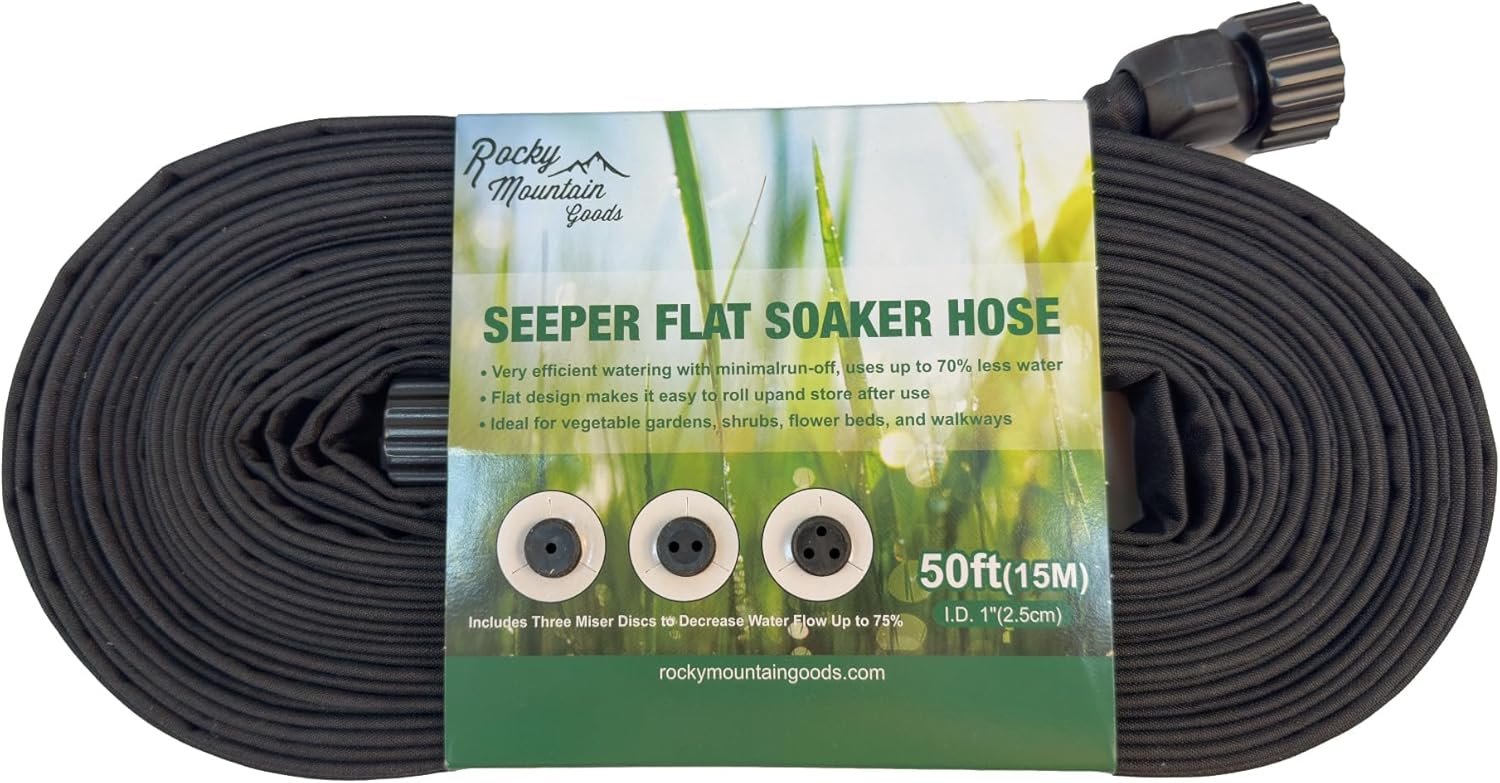
Heavy-duty recycled rubber, a 7-year warranty, and over 4,100 reviews make this the round hose we recommend most. It weeps from every side, snakes around trees without kinking, and is linkable so you can extend it as beds grow.
Warm it in the sun before laying it into tight curves, and test the spigot connection first — a few buyers report connector leaks out of the box.
Best Premium Round
Dramm ColorStorm Round Soaker Hose
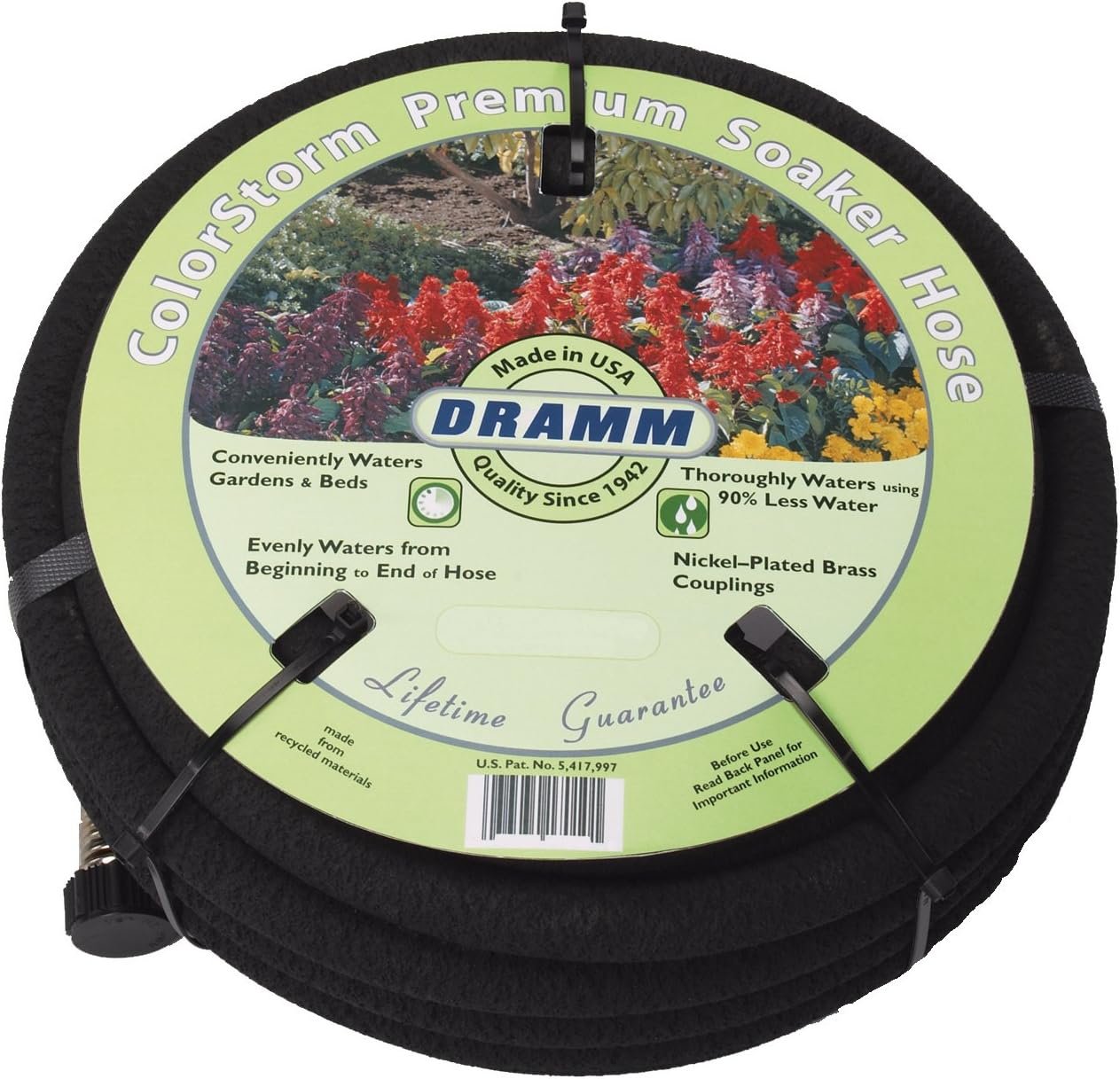
A professional-grade round hose with brass fittings, heavy rubber construction, and a 4.4-star rating. It delivers the most even moisture across its full length and handles high pressure without swelling. At around $49 it is the long-term pick for serious gardeners.
Best Flat Soaker Hose Picks
If straight rows and easy storage point you toward flat, start with these two. For more flat-profile options, see our guide to the best soaker hose for vegetable garden.
Best Overall Flat
Gilmour Flat Soaker Hose
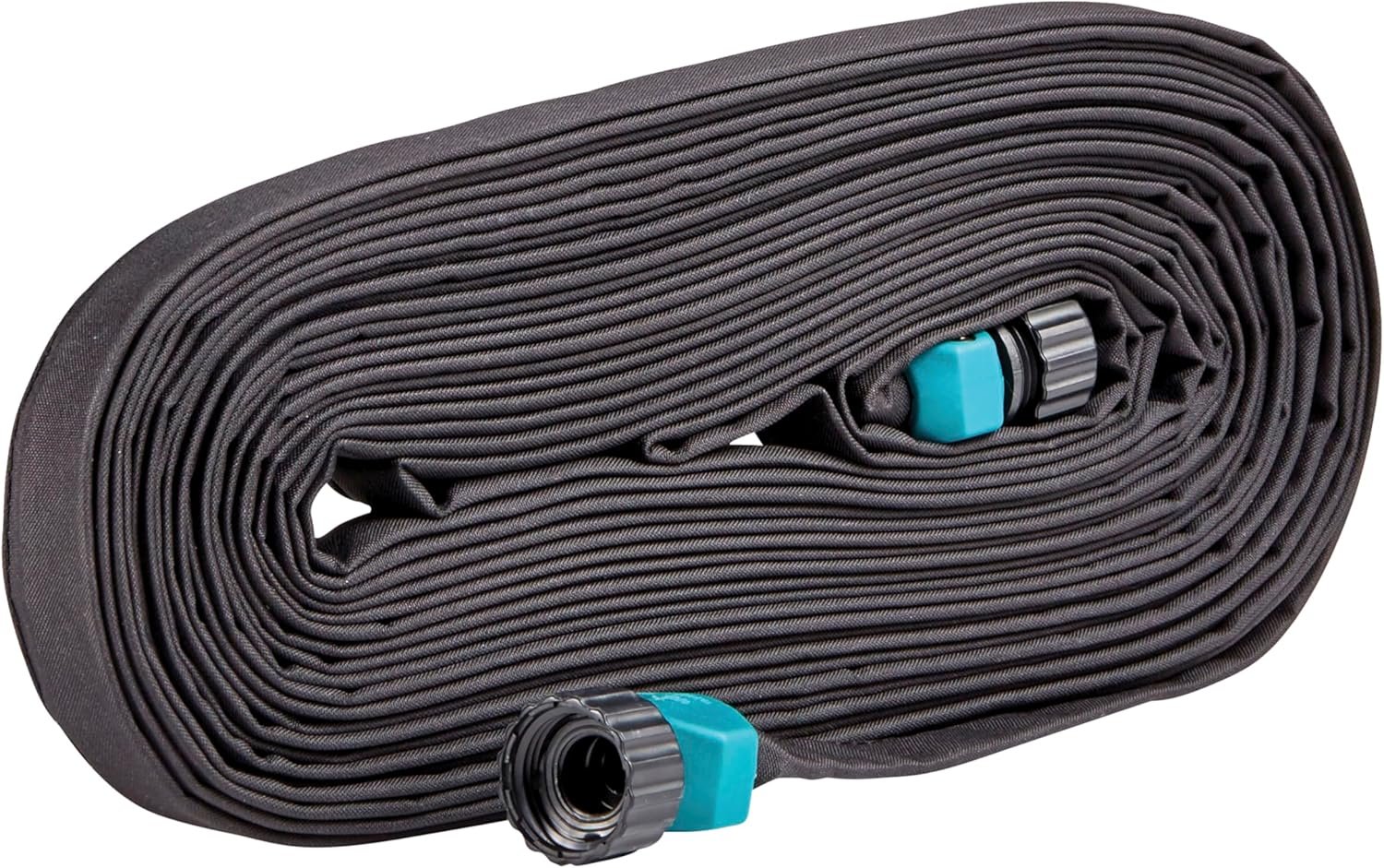
At around $17 with nearly 9,000 reviews, the Gilmour is the most tested flat hose available. Its flat profile lies neatly between rows, sits cleanly under mulch, and delivers slow, even moisture straight to the root zone.
It is made from recycled vinyl, so it stiffens slightly in cold — store it indoors before frost and it lasts multiple seasons. The best-value starting point for straight-row gardens.
Best Budget Flat
Melnor Flat Soaker Hose
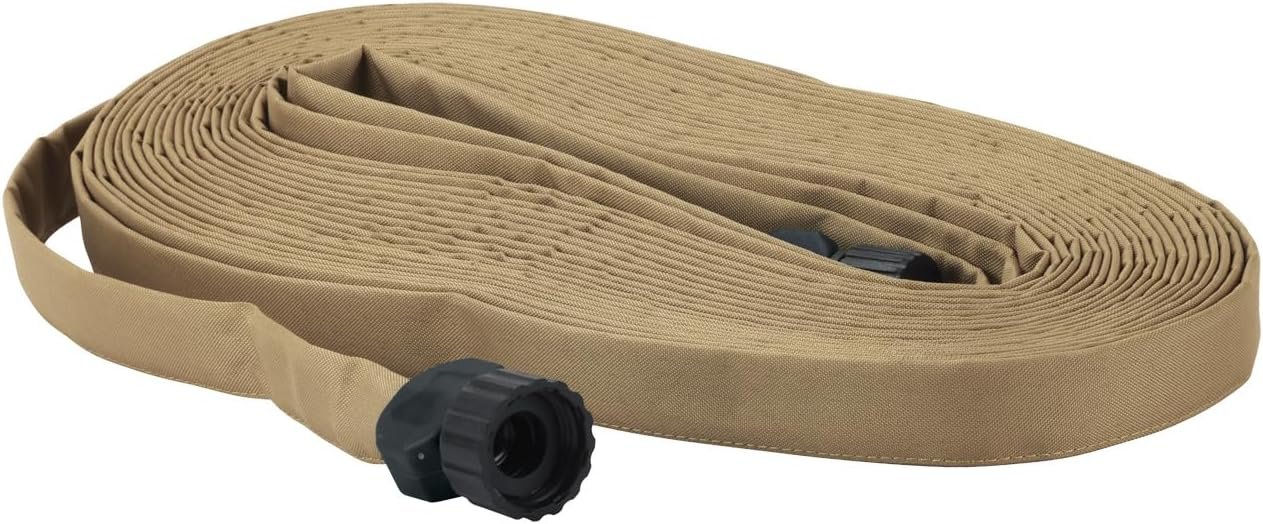
The Melnor is the right call for first-season gardeners testing soaker watering. At around $19 with a 4.0-star rating, it delivers consistent drip along its flat body and fits neatly between rows or around raised-bed perimeters.
Its connectors are plastic, so hand-tighten at the spigot — over-tightening causes minor leaks. A decades-old garden brand, not a no-name gamble.
Frequently Asked Questions About Round vs Flat Soaker Hoses
Is a round or flat soaker hose better?
Neither is universally better — it depends on your garden’s shape. A round soaker hose wins for curved beds, trees, and long-term durability because it weeps from all sides and resists kinking. A flat soaker hose wins for straight rows, compact storage, and lower cost. Match the profile to your layout.
What is the main difference between flat and round soaker hoses?
A flat soaker hose has holes on one side only, so it waters in a targeted direction along straight rows. A round soaker hose has pores all around, so it weeps water in every direction and snakes around curves and trees without kinking.
Which lasts longer, round or flat?
Round soaker hoses generally last longer. They are usually made of rubber or recycled rubber that handles sun and pressure better than the vinyl common in flat hoses. The best round hoses carry multi-year warranties; flat hoses are durable but tend to wear faster.
Can you bury both types of soaker hose?
Yes, both can sit under 1–2 inches of mulch. Round rubber hoses can be buried deeper without the weight pinching off the flow. Flat hoses should stay under light mulch only, since heavy soil can press the thin profile and restrict water.
Which is cheaper, round or flat?
Flat soaker hoses are usually cheaper upfront, making them a good budget entry point. Round hoses cost slightly more but often last longer, so the cost per season can be similar or lower over time.
Do flat soaker hoses kink more than round?
Flat hoses can kink if wound tightly around curves, which restricts water flow. Round hoses resist kinking through curves and snake around obstacles more naturally. For curved layouts, round is the more forgiving choice.
Round vs Flat Soaker Hose: The Verdict for 2026
The round vs flat soaker hose decision is really a question about your garden’s shape. For curved beds, trees, shrubs, and years of durable service, a round hose like the Rocky Mountain Goods is the better buy. For straight vegetable rows, easy storage, and a lower price, a flat hose like the Gilmour is hard to beat.
Still deciding which model to pick within each type? Browse our full guides to the best round soaker hose and the best soaker hose for vegetable garden, or visit our Garden hub for more watering picks.
One last piece of advice: if your garden has both straight rows and curved beds, there is no rule against owning one of each. Many experienced gardeners run a flat hose down the vegetable rows and a round hose around the ornamentals and trees. At these prices, matching each hose to the bed it serves often beats forcing one profile to do everything.
See Our #1 Round Pick on Amazon →
Affiliate Disclosure
How We Make Money on HomeAppliancePicks.com
HomeAppliancePicks.com is a participant in the Amazon Services LLC Associates Program, an affiliate advertising program designed to provide a means for sites to earn advertising fees by advertising and linking to Amazon.com. As an Amazon Associate, I earn from qualifying purchases. All product prices are accurate at the time of publication. We independently research, test, and recommend products; we may receive commissions on purchases made through our links.