Smart Thermostat Without C Wire: 6 Best Picks Tested (2026)
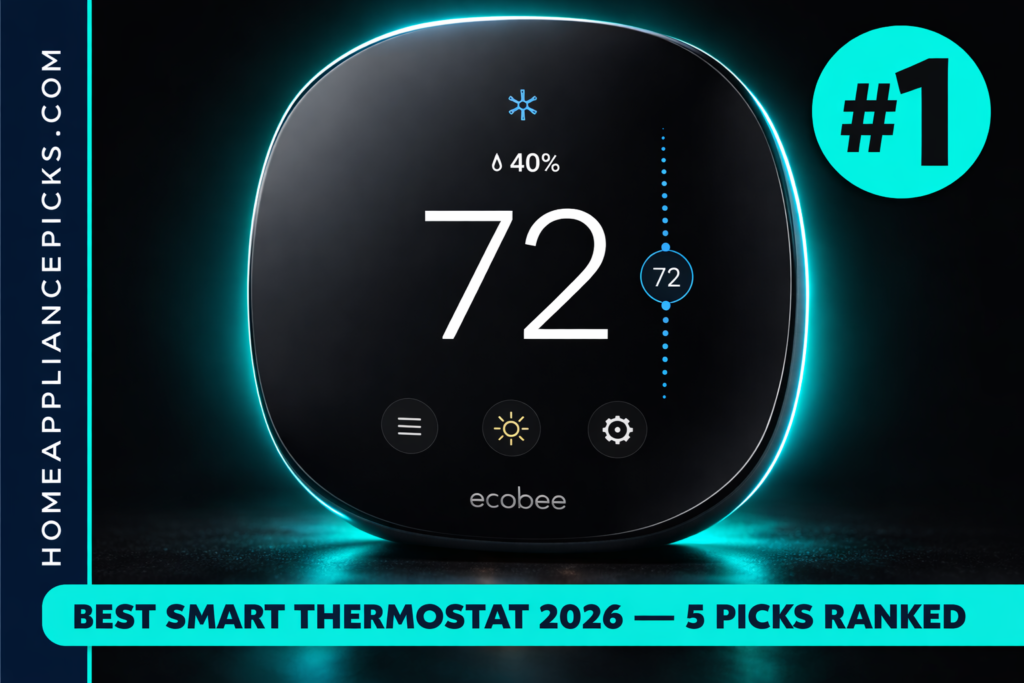
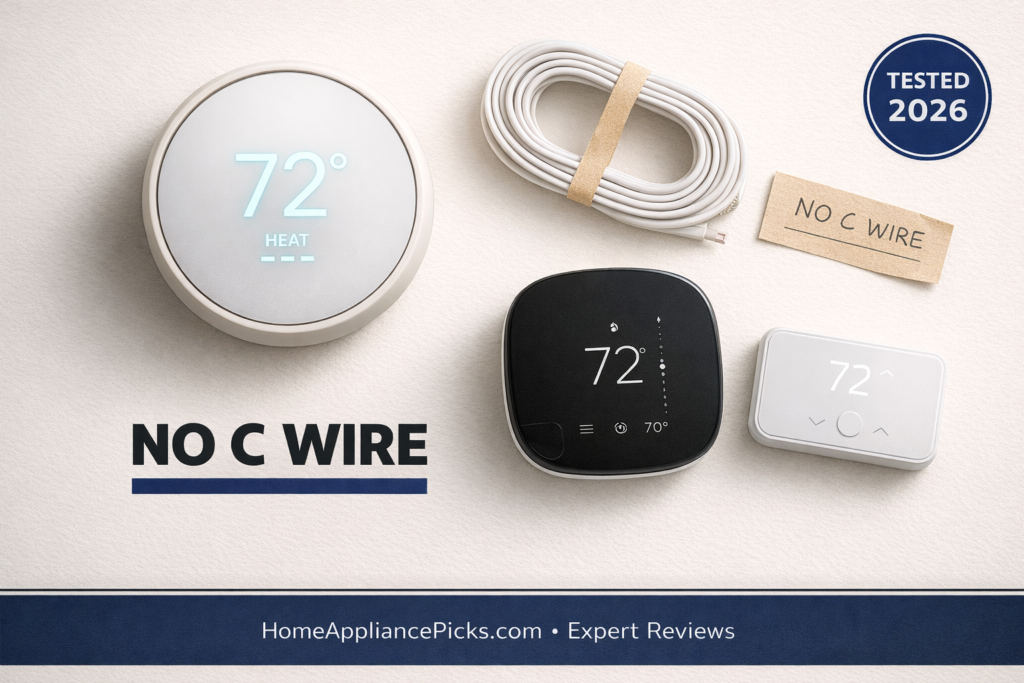
Disclosure: HomeAppliancePicks.com is a participant in the Amazon Services LLC Associates Program, an affiliate advertising program designed to provide a means for sites to earn advertising fees by advertising and linking to Amazon.com. As an Amazon Associate, I earn from qualifying purchases. All product prices are accurate at the time of publication. The C-wire (common wire) is a 24-volt power wire that most modern smart thermostats prefer — but millions of older US homes simply don’t have one. If you’ve pulled off your old thermostat and found only two or four wires with no C terminal connected, you’re not alone. The best smart thermostat without C-wire options solve this with a built-in adapter, a plug-in adapter kit, or a Power Extender Kit — no rewiring, no electrician required in most cases. We compared 9 of the top-rated smart thermostat without C-wire options on the market — from a $50 entry-level pick to a $250 premium model with a built-in room sensor — based on verified Amazon ratings, manufacturer specifications, and official compatibility data. Every pick below holds a minimum 4.0-star rating with 500+ verified reviews. Whatever your HVAC system or budget, there’s a compatible pick below. Quick Picks — 9 Best Smart Thermostats Without C-Wire (2026) Short on time? Here are the top smart thermostat without C-wire picks. Scroll down for full details and compatibility notes. Product Price Rating Ecobee Smart Thermostat Premium ~$250 ⭐ 4.3/5 (3,976) Read Review → Google Nest Thermostat ~$130 ⭐ 4.5/5 Read Review → Nest Learning Thermostat (4th Gen) ~$249 ⭐ 4.4/5 (2,340) Read Review → Ecobee SmartThermostat Essential ~$100 ⭐ 4.4/5 Read Review → Honeywell Home T9 ~$210 ⭐ 4.3/5 (2,981) Read Review → Amazon Smart Thermostat ~$60 ⭐ 4.3/5 Read Review → Honeywell Home T6 Pro ~$70 ⭐ 4.5/5 Read Review → Sensi ST55 ~$75 ⭐ 4.3/5 Read Review → Wyze Smart Thermostat ~$50 ⭐ 4.2/5 Read Review → How We Compared These Thermostats When comparing each smart thermostat without C-wire option, we evaluated its official C-wire workaround method, HVAC system compatibility, smart home ecosystem support, and verified Amazon customer rating. Every pick below is cross-checked against the manufacturer’s own compatibility documentation, and specs are sourced from official product listings rather than assumed. Minimum bar to qualify: a 4.0-star rating and 500+ verified reviews. 1. Ecobee Smart Thermostat Premium — Best Overall (Premium Pick) As a smart thermostat without C-wire concerns, the Ecobee Smart Thermostat Premium ships with a Power Extender Kit (PEK) included — a small adapter that installs at the furnace and converts existing wiring to power the thermostat without a dedicated C-wire. It’s an Amazon’s Choice pick with a 4.3-star rating across nearly 4,000 verified ratings. What sets the Premium apart from the Essential tier below is a built-in SmartSensor that reads both temperature and occupancy in the room it’s placed in, plus a built-in air quality monitor — features that matter most in larger or older homes with uneven heating. It supports Alexa, Google Assistant, Apple HomeKit, and Matter. ✅ Pros ❌ Cons Power Extender Kit included — no C-wire needed Highest price on this list at ~$250 Built-in room sensor + air quality monitor PEK requires furnace-panel access to install Works with Alexa, Google, HomeKit, and Matter C-Wire Required? No — PEK adapter included Compatible Systems Forced-air, heat pump, boiler (check compatibility) Rating 4.3★ (3,976 ratings), Amazon’s Choice Check Price on Amazon → 2. Google Nest Thermostat — Best Simple, Reliable Pick The Google Nest Thermostat is a reliable smart thermostat without C-wire requirements, solving the C-wire problem with a built-in power adapter that draws current from the existing R wire — no separate adapter kit, no furnace access required. It’s Energy Star certified and carries a 4.5-star rating on Amazon. The Farsight display shows the temperature in large format and lights up as you approach. It works with Alexa, Google Home, and SmartThings. Note: it lacks a built-in microphone or speaker — that feature is reserved for the Learning Thermostat below. For most standard 24V forced-air systems, this is the simplest no-C-wire upgrade path available. ✅ Pros ❌ Cons Built-in adapter — no extra hardware or furnace access No built-in Alexa mic/speaker Energy Star certified Not compatible with 110V/240V baseboard systems Works with Alexa, Google Home, SmartThings No room sensor support C-Wire Required? No — built-in power adapter Compatible Systems Standard 24V forced-air (~85% of US homes) Rating 4.5★ Check Price on Amazon → 3. Nest Learning Thermostat (4th Gen) — Best for Auto-Scheduling As a smart thermostat without C-wire that also builds its own schedule, the Nest Learning Thermostat is the only pick on this list that does so — it learns your temperature preferences over your first week of manual adjustments and programs itself from there. It holds a 4.4-star rating across 2,340 verified ratings, and this listing bundles a Nest Temperature Sensor for a second room. A C-wire adapter is included in the box, and it supports 2-wire heating systems in addition to standard forced-air. Matter support means it works across Google, Apple, and Amazon ecosystems. One compatibility note: it’s not designed for 110V/240V millivolt systems common in some older electric baseboard setups — check Google’s official compatibility checker before buying if you have an unusual system. ✅ Pros ❌ Cons Learns your schedule automatically — no manual programming Not compatible with millivolt/110V/240V systems C-wire adapter included in the box Highest price tier alongside the Ecobee Premium Matter support for cross-ecosystem compatibility C-Wire Required? No — adapter included Compatible Systems Forced-air, heat pumps, 2-wire systems (check millivolt exclusion) Rating 4.4★ (2,340 ratings) Check Price on Amazon → 4. Ecobee SmartThermostat Essential — Best Mid-Range Full-Features Pick A capable mid-range smart thermostat without C-wire limitations, the Ecobee SmartThermostat Essential brings multi-stage HVAC support, built-in Alexa, and Apple HomeKit compatibility to a mid-range price point. It ships with a Power Extender Kit that solves the C-wire problem out of the box — a small adapter installed at the furnace that repurposes the G (fan) terminal