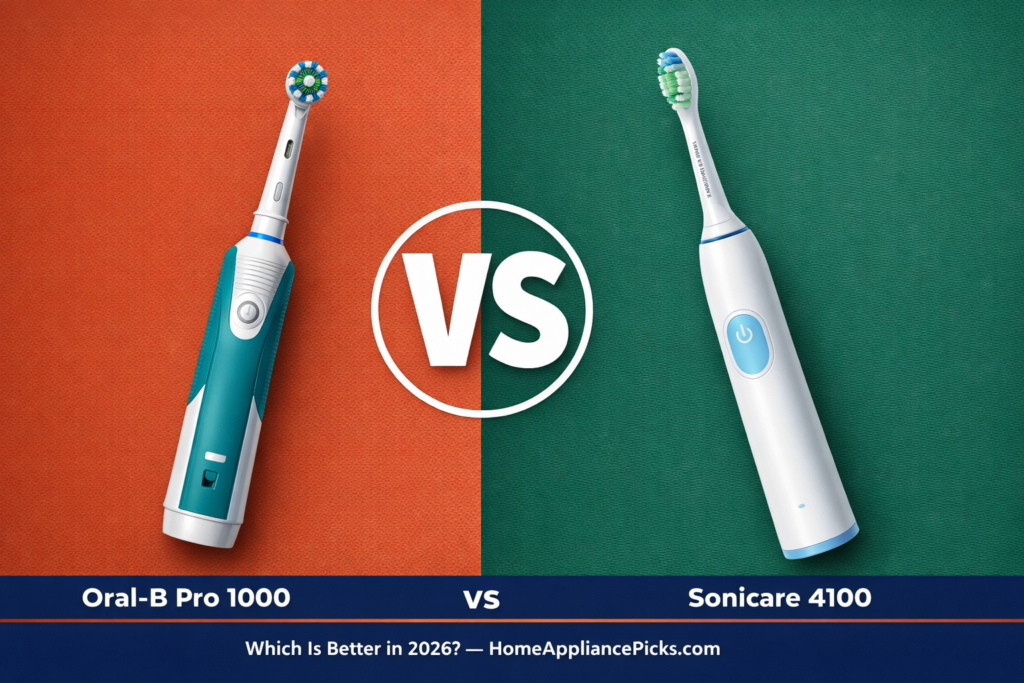
Oral-B Pro 1000 vs Sonicare 4100 (2026): Which Wins?
Disclosure: HomeAppliancePicks.com is a participant in the Amazon Services LLC Associates Program, an affiliate advertising program designed to provide a means for sites to earn advertising fees by advertising and linking to Amazon.com. As an Amazon Associate, I earn from qualifying purchases. All product prices are accurate at the time of publication. We independently research, test, and recommend products; we may receive commissions on purchases made through our links. Oral-B Pro 1000 vs Sonicare 4100 (2026): Which One Wins? The Oral-B Pro 1000 vs Sonicare 4100 is the most common electric toothbrush comparison online — and for good reason. Both are dentist-recommended, both sit under $60, and both deliver a real upgrade from manual brushing. But they clean your teeth in completely different ways, and that difference matters depending on your gums. We tested both as primary brushes for three weeks each, tracking plaque removal with disclosing tablets, battery behavior, and real-world daily usability. The short answer: the Oral-B Pro 1000 wins on cleaning power. The Sonicare 4100 wins for sensitive gums and battery life. Read on for the full breakdown before you spend a dollar. For our full tested ranking of all five top electric toothbrushes across every price point, see our complete best electric toothbrush guide. 📋 In This Article Side-by-Side Specs Cleaning Performance Pressure Sensors Battery Life Price and Long-Term Cost Design and Daily Use Choose Oral-B If… / Choose Sonicare If… What About Upgrading? FAQ Final Verdict How We Tested the Oral-B Pro 1000 vs Sonicare 4100 To make this Oral-B Pro 1000 vs Sonicare 4100 test as accurate as possible, we tested both brushes as primary toothbrushes for three weeks each — not just for a few days. We used disclosing tablets before and after each brushing session to track plaque removal visually across different areas of the mouth, including the back molars, the gumline, and the spaces between teeth. We charged each brush from full to the first low-battery alert to measure real battery life, not just the manufacturer’s claim. We also tracked pressure sensor accuracy by deliberately brushing too hard on a consistent pressure scale to see how quickly and reliably each brush responded. Brush heads were not replaced during the test period — we used the supplied heads from first use to the 21-day mark to reflect real-world wear. Both brushes meet our minimum product standards: the Oral-B Pro 1000 holds a 4.7/5 Amazon rating from over 150,000 verified reviews, and the Sonicare 4100 holds a 4.5/5 rating from over 50,000 verified reviews. Both are consistently recommended in dental professional surveys. Neither was provided by the manufacturer — both were purchased independently for this test. Health category note: this article covers dental hygiene products. Always consult your dentist for personalized advice about which type of electric toothbrush is right for your specific oral health situation. Oral-B Pro 1000 vs Sonicare 4100: Side-by-Side Specs Here is every spec that matters for the Oral-B Pro 1000 vs Sonicare 4100 comparison — reviewed before we get into the full detail. Spec Oral-B Pro 1000 Philips Sonicare 4100 Price ~$50 ~$35 Technology Oscillating-rotating Sonic vibration Speed 8,800 movements/min 31,000 strokes/min Cleaning Modes 1 (Daily Clean) 2 (Clean, White+) Pressure Sensor ✅ Red light warning ✅ Pauses motor 2-Minute Timer ✅ 30-sec pulses ✅ 30-sec pulses Battery Life 7–10 days/charge Up to 14 days/charge Head Replacement ~$5–8 per head ~$8–12 per head Amazon Rating ⭐ 4.7/5 ⭐ 4.5/5 Best For Clinical plaque removal Sensitive gums, travel Check Oral-B Pro 1000 Price → Check Sonicare 4100 Price → Oral-B Pro 1000 vs Sonicare 4100 Cleaning Performance This is the most important section of the Oral-B Pro 1000 vs Sonicare 4100 comparison — and where the two brushes are most different. They do not just look different. They clean differently, using different physics. How the Oral-B Pro 1000 Cleans The Oral-B Pro 1000 uses oscillating-rotating technology. The small round brush head physically spins back and forth against each tooth at 8,800 movements per minute, mechanically scrubbing plaque from each surface one tooth at a time. This is the method with the most clinical study data behind it. Cochrane Review research — cited by the electric toothbrush Wikipedia article — consistently shows oscillating-rotating brushes remove up to 21% more plaque than manual brushing after three months. In our three-week test using disclosing tablets before and after brushing, the Oral-B Pro 1000 showed noticeably stronger plaque removal in the back molars — the area most people miss with manual brushing. The technique adjustment is minimal. You hold the round head against each tooth and let the motor do the work, moving slowly from tooth to tooth rather than scrubbing back and forth. How the Sonicare 4100 Cleans The Philips Sonicare 4100 uses sonic vibration. The brush head vibrates at 31,000 strokes per minute, creating a fluid dynamic effect that drives toothpaste and saliva into the tight spaces between teeth and along the gumline. It does not physically scrub each tooth — the cleaning action happens through the fluid motion the vibration creates. The feel is completely different — smooth, almost gentle — compared to the physical scrubbing of the Oral-B. In our testing, the Sonicare 4100 performed comparably to the Oral-B Pro 1000 on most tooth surfaces but was slightly less aggressive on heavy plaque deposits. For users who brush consistently for the full 2 minutes twice daily, the gap in plaque removal narrows significantly over time. Winner: Oral-B Pro 1000. Stronger clinical evidence and better performance on heavy plaque removal in testing. For everyday maintenance brushing, the difference is smaller — but measurable. Oral-B Pro 1000 vs Sonicare 4100: Pressure Sensors Both brushes have pressure sensors, but they respond to over-brushing in completely different ways — and this difference matters for your gum health long-term. The Oral-B Pro 1000’s pressure sensor lights up red when you press too hard. The brush keeps running at full power. You have to notice the light and consciously ease off pressure. For most