The Best Gridlles & Smokers Griddles of 2026
Forget flare-ups and falling vegetables. Outdoor griddles (or flat top grills) have revolutionized backyard cooking, allowing you to sear smash burgers, fry eggs, and sauté fajitas all on one massive steel surface. Whether you want a restaurant-grade 4-burner station or a portable tabletop unit, we’ve tested the top models from Blackstone, Camp Chef, and Weber to help you reclaim your patio.
Top Gridlles & Smokers Dryers Picks at a Glance
Camp Chef Flat Top 600
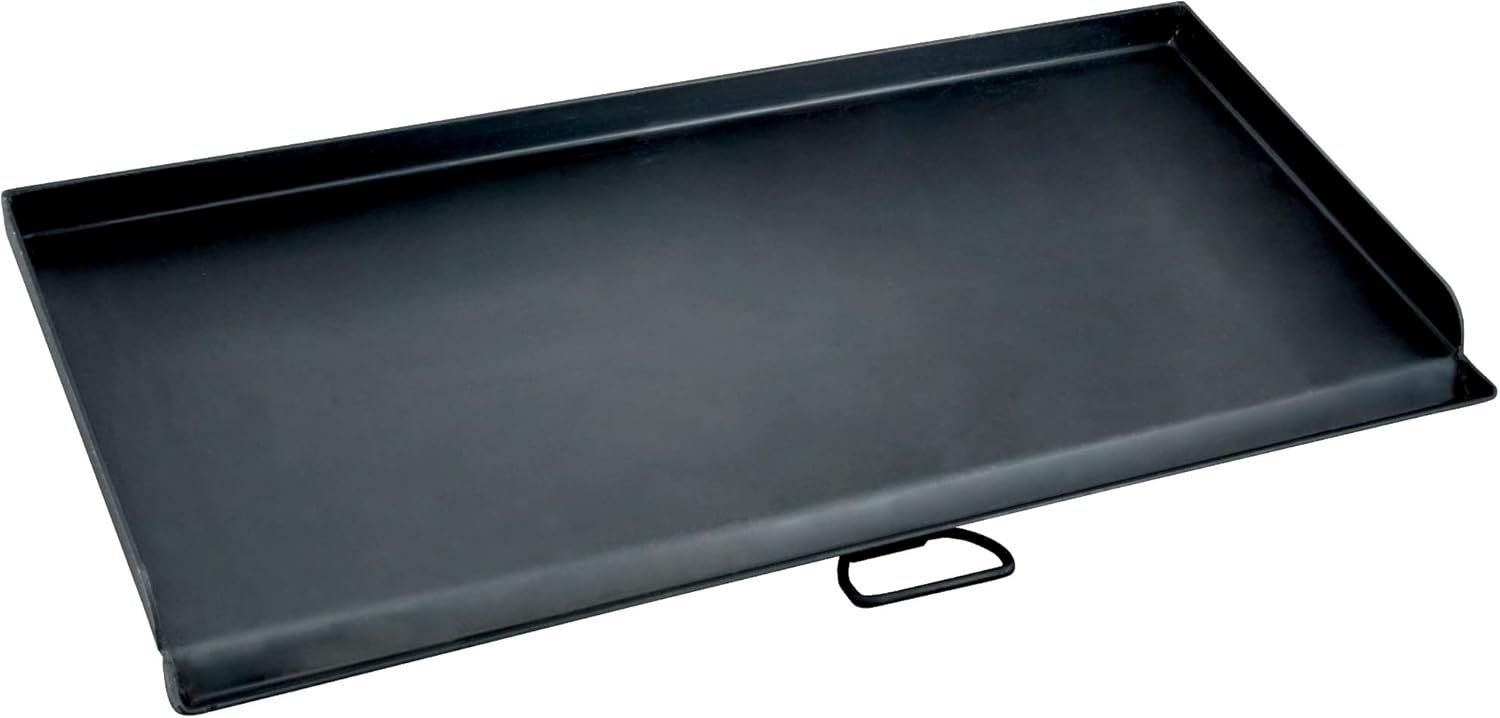
Two grills in one. Unlike dedicated griddles, the Camp Chef 600 allows you to remove the flat top to reveal traditional grill grates underneath. This means you can sear steaks with grill marks on Friday and make pancakes on Saturday without buying two separate units.
Check Price on Amazon →
Weber Slate 30" Rust-Resistant Griddle
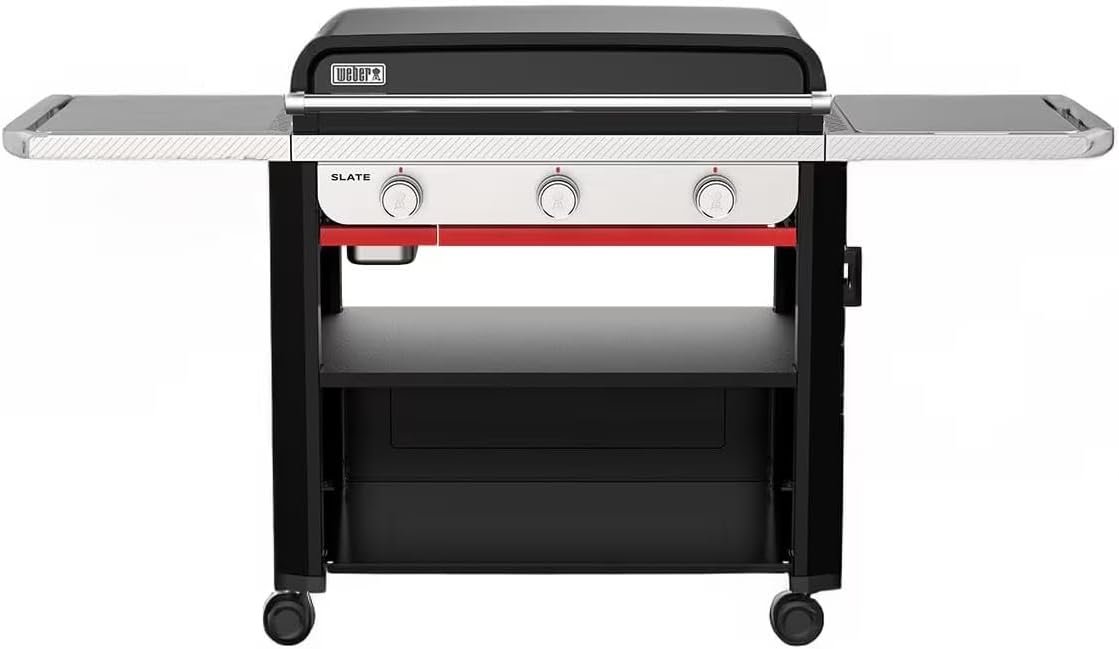
No more rusty cooktops. Weber has solved the biggest headache of griddle ownership. The Slate series features a pre-seasoned, rust-resistant carbon steel cooktop that is ready to cook right out of the box. It also includes a digital temperature display for precise heat management.
Check Price on Amazon →
Pit Boss Sierra Griddle
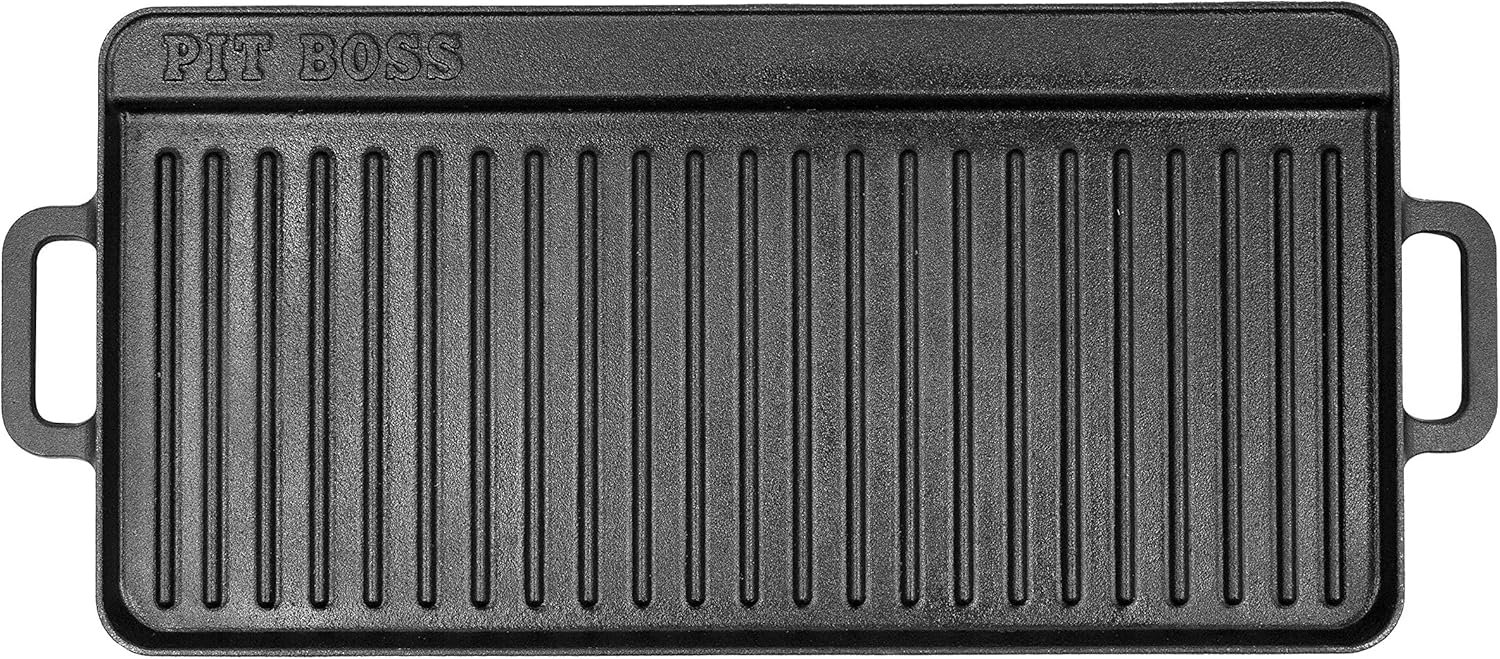
Skip the seasoning process. The Pit Boss Sierra uses a proprietary ceramic non-stick coating instead of traditional rolled steel. This means you don't have to spend hours seasoning it with oil—it's non-stick from day one. Perfect for delicate items like eggs and fish that usually stick.
Check Price on Amazon →
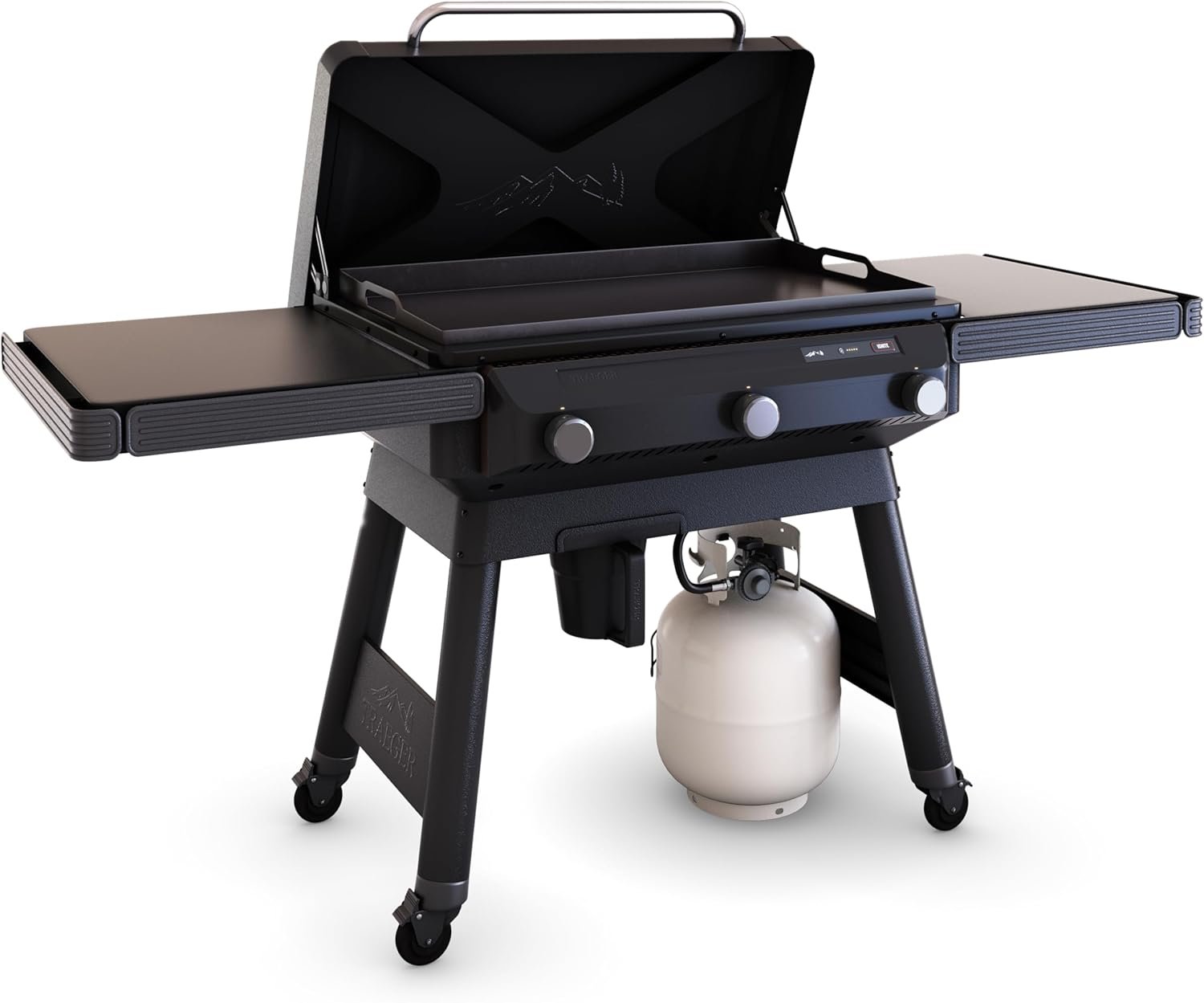
Traeger Flatrock Flat Top Grill
Zones that actually work. Many griddles suffer from heat bleeding (where the whole surface gets hot). The Traeger Flatrock uses insulated dividers between its three U-burners, creating truly distinct cooking zones. You can sear a steak on high on the left while keeping buns warm on low on the right.
Check Price on Amazon →
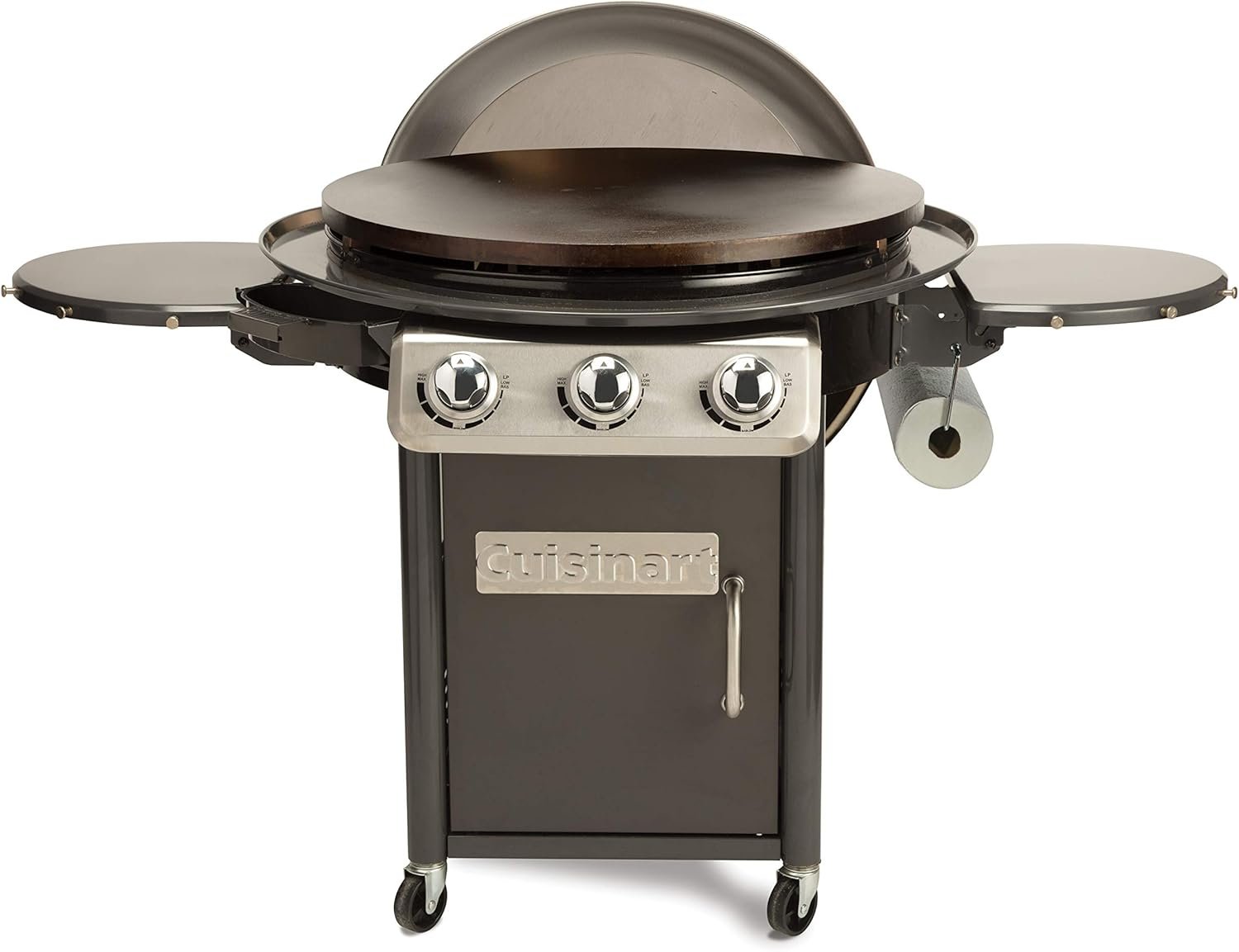
Cuisinart 360° XL Outdoor Griddle
Gather around the grill. The unique round design of the Cuisinart 360 allows everyone to stand around the griddle and cook together, creating a Hibachi-style social experience. It heats evenly from the center out and includes a vented lid for steaming or roasting.
Check Price on Amazon →Best Overall: Blackstone 36" Omnivore Griddle (4-Burner)
✅ Pros
- Omnivore Plate prevents warping & saves fuel
- Massive 768 sq. in. cooking surface
- Best-in-class rear grease management
- Huge ecosystem of accessories available
❌ Cons
- Requires seasoning (maintenance required)
- Heavy and difficult to move alone
- Lid handle can get hot
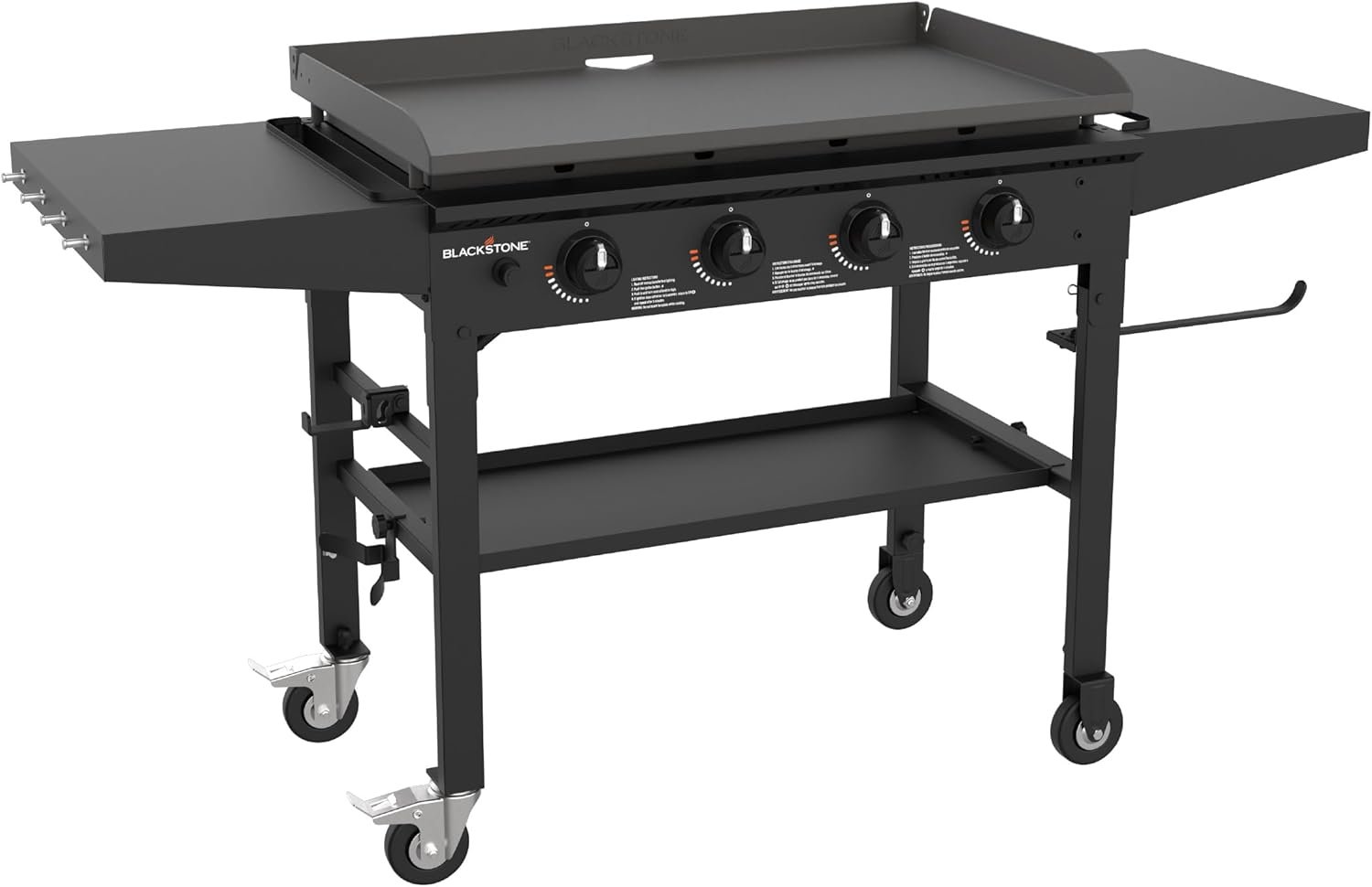
The standard for backyard hibachi
More In-Depth Reviews
Masterbuilt Gravity Series 800
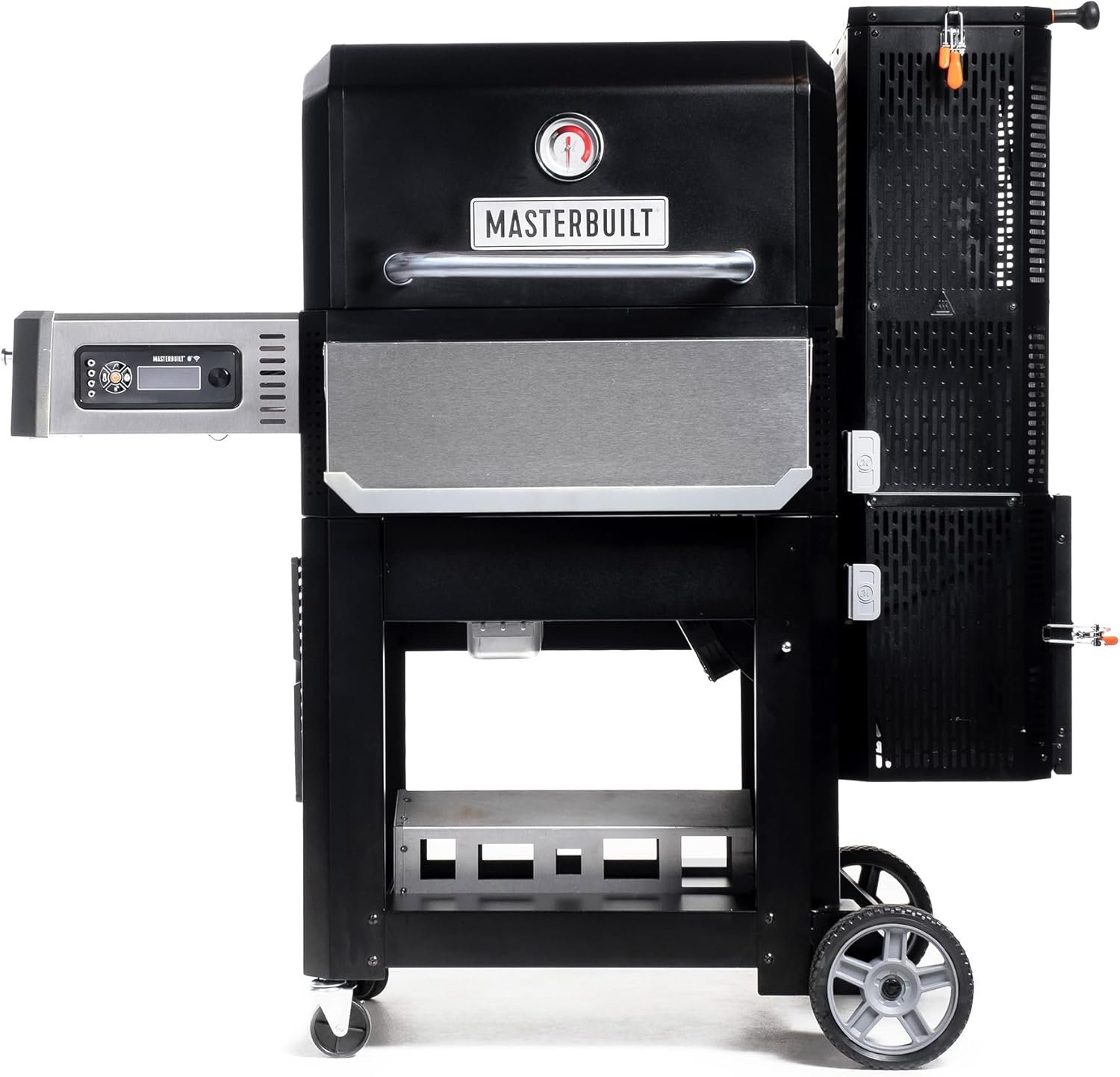
This grill solves the biggest debate in BBQ: Charcoal Flavor vs. Pellet Convenience. It uses a gravity-fed hopper full of real lump charcoal (or briquettes), but a digital fan controls the airflow to maintain exact temperatures. You get the authentic smoke ring of charcoal with the "set it and forget it" ease of an oven. It even includes a flat top griddle insert.
- Real charcoal flavor with digital ease
- Reaches 700°F for searing in 13 mins
- Includes interchangeable griddle top
- Large capacity hopper (10lbs lump)
- Build quality feels thinner than Weber
- Electronics can be finicky over time
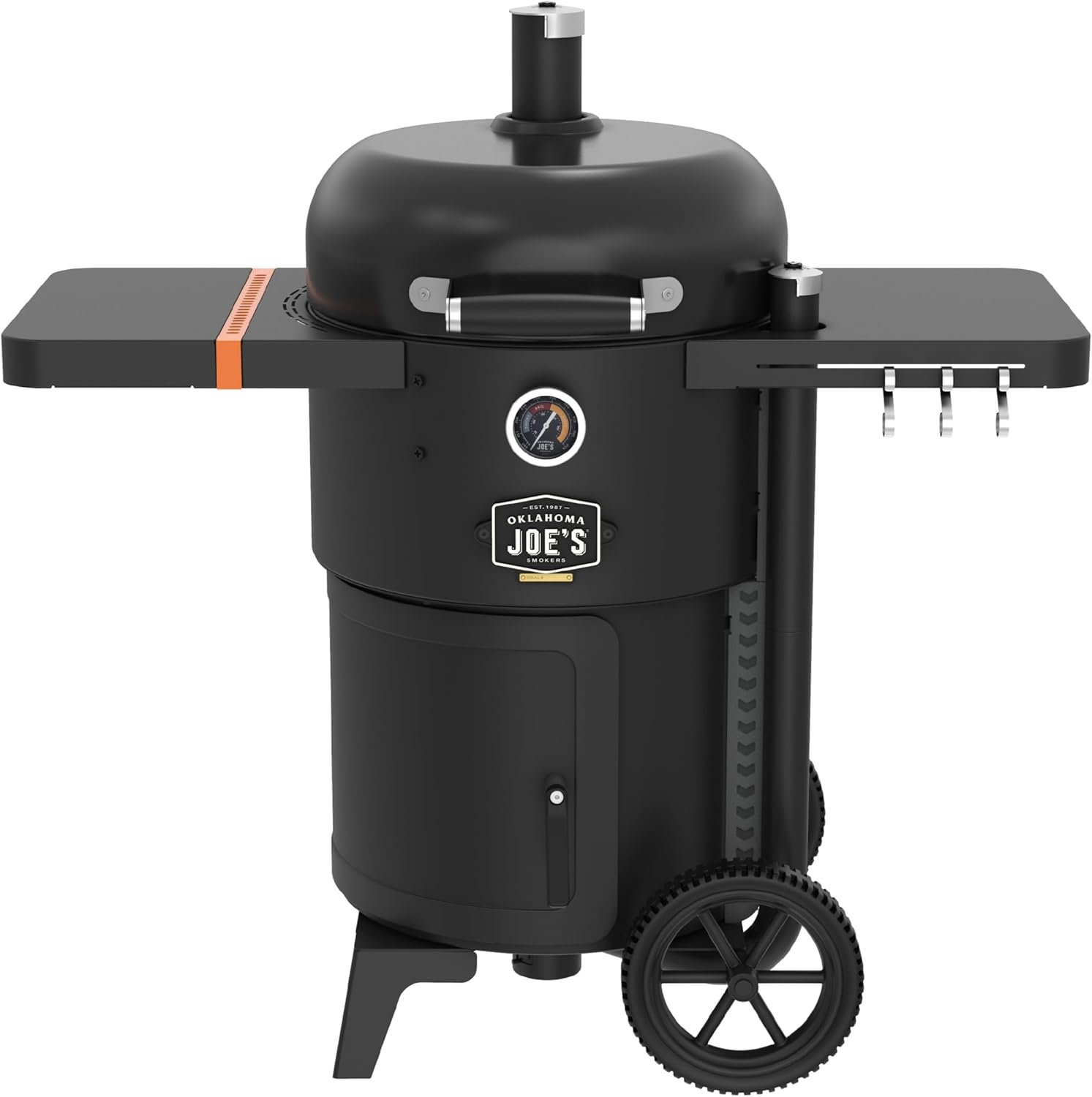
Oklahoma Joe's Bronco Drum Smoker
The Bronco is built like a tank. This drum smoker uses a unique airflow control system that allows for precise temperature management, holding steady for 10+ hours on a single basket of charcoal. It excels at hanging ribs and chickens vertically, which increases capacity and bastes the meat in its own juices as it cooks.
- Incredible build quality (heavy steel)
- holds temp steady for long cooks
- Includes meat hanging rack & hooks
- Large wheels for easy moving
- Heavy lid (no hinge on standard model)
- Accessing fire requires removing food
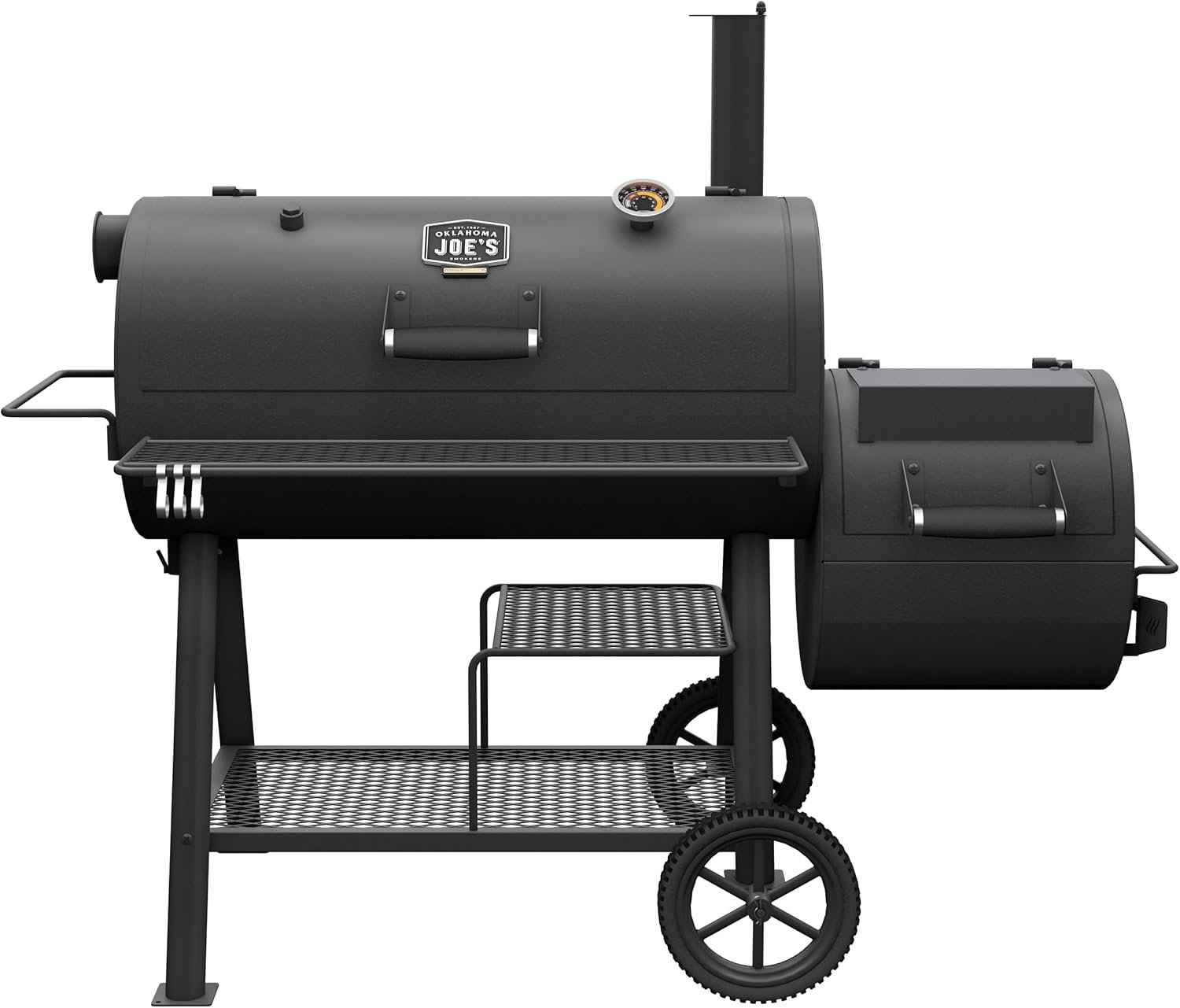
Oklahoma Joe's Highland Offset Smoker
If you want to learn the "art" of fire management, this is your classroom. The Highland is the best entry-level offset smoker on the market. It requires you to tend a real wood fire in the side box, drawing heat and smoke across the meat. It's labor-intensive but produces the most authentic Texas-style BBQ flavor possible.
- Authentic stick-burner flavor
- Large cooking capacity
- Customizable (easy to mod)
- Durable heavy-gauge steel
- Requires constant attention (no walking away)
- Can leak smoke (mods recommended)
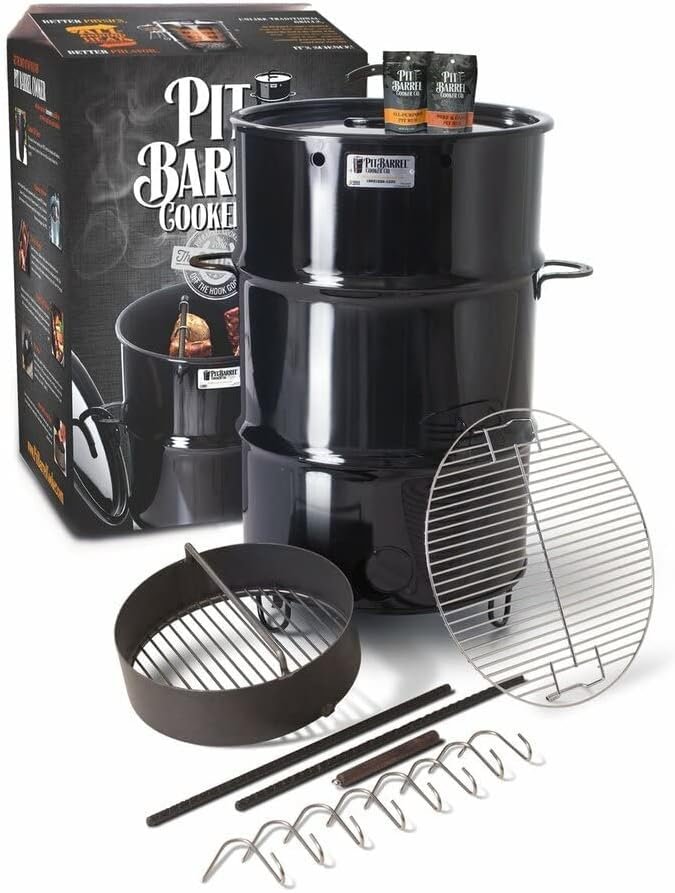
Pit Barrel Cooker Classic
The Pit Barrel Cooker defies the "low and slow" rules by cooking slightly hotter and faster, yet producing incredibly juicy results. The secret is the "Hook-n-Hang" method, where meat hangs vertically over the coals. Grease drips down onto the fire, vaporizing into a flavor fog that bastes the meat continuously. It's practically foolproof.
- Simplest charcoal smoker to use
- Huge capacity (hang 8 racks of ribs)
- Produces unique "vaporized" flavor
- Includes all hooks and tools
- No temperature control (one setting)
- No ash pan (must dump barrel)
Live #1 Amazon Best Seller
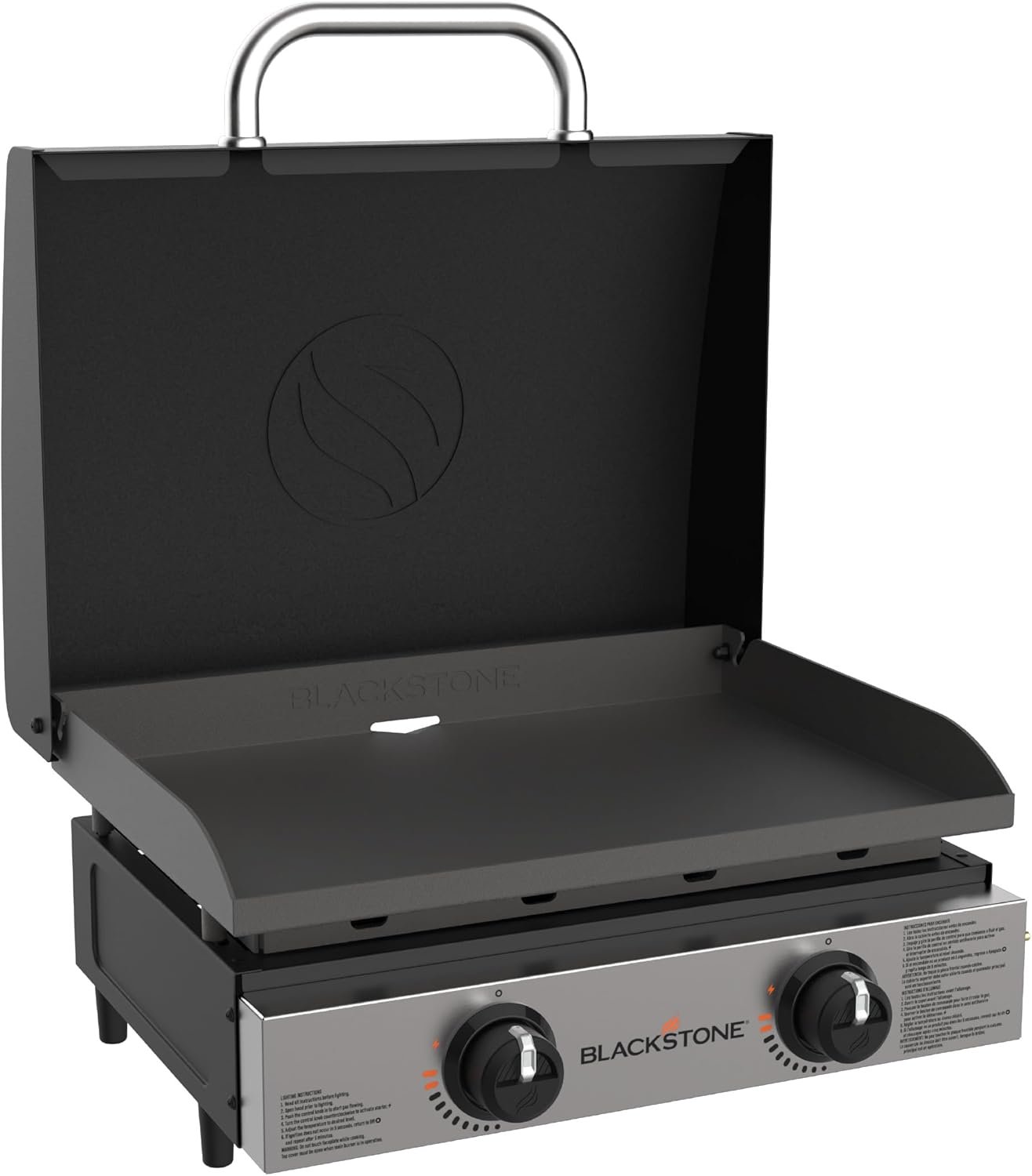
Blackstone 22" Tabletop Griddle
The ultimate camping and tailgating machine. This 2-burner portable unit offers enough space to cook 12 burgers at once but is compact enough to fit in a trunk. It features Blackstone's signature rear grease management and adjustable heat zones.
Check Price on Amazon →Gridlles & Smokers Buying Guide
FAQS About Outdoor Griddles & Smokers
What does “seasoning” a griddle mean?
Seasoning is the process of bonding thin layers of oil to the metal surface using heat (the oil “polymerizes”), creating a more non-stick cooking layer and helping protect the steel from rust. For a new flat-top griddle, you typically clean off factory oils first, then apply multiple ultra-thin coats of a high-smoke-point oil, heating each layer until it darkens and stops smoking before adding the next.
What is the best oil for seasoning an outdoor griddle?
The best oils for seasoning are neutral, high-smoke-point options that form durable layers: avocado oil, grapeseed oil, or canola/vegetable oil are common go-to choices. The key is not the brand—it’s the technique: apply a very thin coat, spread it evenly, and let it fully heat and set before repeating. Thick oil layers tend to get sticky or uneven instead of forming a smooth seasoned finish.
How do I clean a flat-top griddle after cooking?
Clean while the surface is still hot (or around “steam-friendly” heat). Scrape food bits into the grease tray, then add a small amount of water to create steam that loosens stuck-on residue. Wipe with paper towels (tongs help), repeat if needed, and finish with a very light coat of oil to protect the cooktop. Avoid soaking the plate or leaving standing water, which invites rust.
How do I prevent my outdoor griddle from rusting?
Rust prevention is mostly moisture control. After cleaning, dry the surface fully and wipe on a thin protective oil layer. Store the griddle covered and as dry as possible (a hard cover + soft cover combo helps in humid climates). If surface rust appears, scrub it off (grill stone or steel wool), wipe clean, and re-season with a few thin oil layers to rebuild protection.
Why did my griddle top warp or “crown,” and how do I stop it?
Warping usually comes from rapid temperature change (“thermal shock”) or uneven heating—like preheating too long on high, placing frozen/chilled food on a very hot surface, or dumping large amounts of cold water onto the cooktop. To prevent it: preheat gradually, avoid huge cold-water cleanups, don’t cool the plate with ice/cold water, and heat multiple zones during preheat so the metal warms more evenly.
What size outdoor griddle should I get (17 vs 22 vs 28 vs 36 inch)?
Size is mostly about how often you cook full meals at once. 17" is best for camping/tailgates and tight patios. 22" is a solid small-family size (quick meals, fewer “batches”). 28" is the sweet spot for many families because you can cook more items at the same time. 36" is best for entertaining, meal prep, and big breakfast spreads without crowding the surface.
Pellet smoker vs charcoal/offset smoker: which is better for beginners?
If you want the easiest path to consistent BBQ, a pellet smoker is typically the most beginner-friendly because temperature is controlled electronically for a more hands-off cook. Charcoal and offset smokers can deliver deeper “traditional” smoke flavor, but they demand more fire management, airflow control, and attention during long cooks. Your best choice depends on whether you prioritize convenience or the craft of tending a live fire.
Do I need a water pan in a smoker?
A water pan is optional, but it can help in two practical ways: temperature stability (water absorbs and releases heat steadily) and humidity (which can reduce surface drying during long cooks). It’s most useful in charcoal and wood smokers that swing in temperature. In many pellet smokers, it’s less essential because the controller already helps stabilize heat—though some cooks still like the added moisture.
What is the brisket “stall,” and should I wrap?
The “stall” is when brisket’s internal temperature rises slowly or plateaus for hours as moisture evaporates and cools the meat (similar to sweating). Many cooks wrap brisket in butcher paper or foil once bark is set (often in the 150–180°F range) to speed through the stall and reduce drying. Wrapping is optional: unwrapped cooks can build thicker bark, but take longer and require tighter temperature control.
What internal temperature is safe for smoked meat?
For food safety, use a thermometer and follow safe minimum internal temperatures. A common baseline is 165°F for poultry. Whole cuts like steaks/roasts are often listed at 145°F with a rest time, and ground meats are commonly listed higher (often 160°F). Smoking is a slow process, so thermometer accuracy matters—especially for chicken and ground meats.